
English 
+86-21-57450120
+86-18221926197
+86-18221926197
No.1418 Zhuangliang Road, Zhuanghang Town, Fengxian District, Shanghai 201415, P.R. China

Views: 0 Author: Site Editor Publish Time: 2026-03-02 Origin: Site


Accuracy in powder packaging is often misunderstood. Many assume that vacuum systems automatically mean higher precision, yet dosing accuracy primarily depends on measurement control and feedback rather than conveying method alone. Vacuum technology mainly improves feeding stability and dust containment. Understanding this distinction is essential when evaluating a modern Powder Filling Production Line because performance depends on how dosing, feeding, and environmental control work together rather than on a single technology choice.
Auger filling relies on a rotating screw to dispense powder into containers. The screw movement determines the quantity delivered, making it a reliable method for a wide range of powder products. This approach supports consistent dosing when powder flow characteristics remain stable and when the system includes proper feedback mechanisms.
Auger systems are widely used because they handle diverse products, from fine food powders to nutraceutical blends and chemical materials. Their strength lies in predictable volumetric control combined with mechanical simplicity.
Vacuum technology focuses on how powder moves from storage to the filling system. Instead of open transfer that can release dust, vacuum conveying transports powder through sealed pathways. This improves workplace cleanliness and stabilizes feeding.
Dust-free feeding also reduces material loss and protects equipment components from contamination. As production volumes increase, this advantage becomes more significant.
In many production environments, auger dosing and vacuum conveying operate together. Vacuum feeding ensures stable supply to the hopper, while auger filling delivers precise dosing. This combination creates a balanced system that supports both accuracy and clean operation.
Powders rarely behave identically from batch to batch. Changes in particle size, moisture content, and aeration influence density, which affects dosing consistency. Systems that rely solely on fixed volumetric settings may struggle when density fluctuates.
Integrated feedback mechanisms compensate for these variations, allowing production to maintain target weights even when material properties change.
Checkweighing and automated adjustment help detect deviations early. These feedback loops allow operators to maintain accuracy across long production runs rather than relying on periodic manual sampling.
Real-time monitoring also supports traceability and quality documentation, which is important in regulated industries such as pharmaceuticals and nutraceuticals.
Accuracy specifications often assume stable powder flow, consistent density, and proper calibration. Understanding these assumptions helps manufacturers evaluate realistic performance expectations.
Precision depends on system integration rather than dosing technology alone.
Dust forms when powder drops from height, when air displacement occurs during filling, or when sealing between transfer points is insufficient. High-speed production amplifies these effects.
Integrated dust collection reduces airborne particles that can affect operator safety and equipment lifespan. Cleaner environments also support consistent product quality.
Dust containment is particularly important for fine powders, pharmaceutical materials, and products with strict hygiene requirements.
Vacuum conveying stabilizes material flow by delivering powder consistently to the hopper. This reduces interruptions caused by manual refilling and minimizes exposure to environmental conditions.
Free-flowing powders move easily and respond well to volumetric dosing. Cohesive powders may form bridges or irregular flow patterns that affect dosing consistency.
Powders that absorb moisture may clump, altering flow characteristics. Stable feeding design and controlled environments help maintain consistent performance.
Agitators and anti-bridging features maintain material movement inside hoppers. These design elements support stable feeding, especially for difficult powders.
Understanding powder behavior is critical because equipment performance depends on how materials respond to handling.
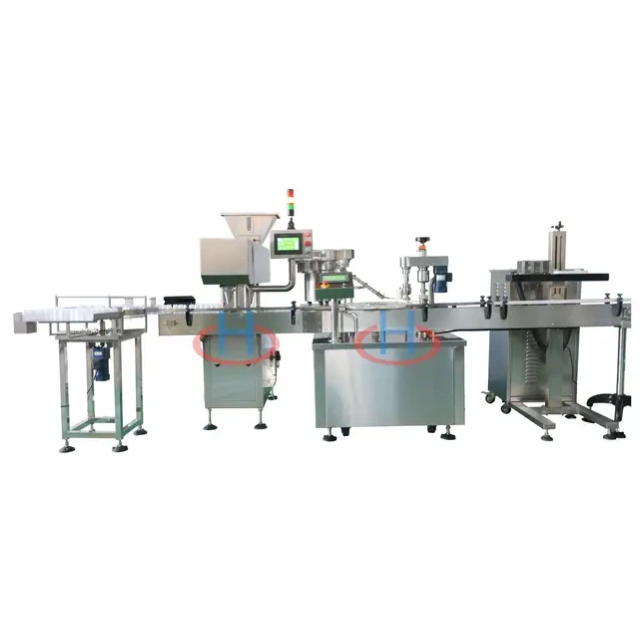
A complete line begins with storage, conveying, and hopper management. Stable feeding ensures dosing equipment receives consistent material supply.
After dosing, containers move through sealing or capping processes that protect product integrity. Synchronization between filling and sealing maintains throughput stability.
Automated checkweighing confirms dosing accuracy. Containers outside defined limits are removed, protecting downstream packaging quality.
Traceability requirements make labeling and coding essential. Integrated end-of-line packaging supports efficient workflow and consistent presentation.
Products with fine particle size or regulatory requirements benefit from enclosed conveying and dust containment. Clean operation reduces maintenance and improves safety.
Industries with strict weight control requirements rely on feedback systems such as checkweighing to maintain consistency across production runs.
Frequent product changes require quick changeover capability. Modular line design supports flexible production without sacrificing accuracy.
Dimension | Auger-focused line | Vacuum-enabled powder line |
Best powder type | Stable flow powders | Fine or dusty powders |
Dust level | Moderate | Low |
Typical integration | Dosing focused | Feeding plus dosing |
Maintenance focus | Screw wear | Filter and conveying system |
Upgrade path | Add checkweigher | Add dust collection and automation |
Operational stability | Dependent on feeding | Improved feeding consistency |
This comparison highlights that the two approaches address different aspects of powder packaging rather than competing directly.
Automation transforms powder packaging from manual handling into controlled production. Stable feeding reduces interruptions, while automated monitoring ensures consistent dosing accuracy.
Integrated lines also improve workplace cleanliness, which supports operator safety and reduces cleaning time. Predictable performance allows manufacturers to plan production more effectively and maintain consistent output.
Automation supports digital monitoring as well. Performance data provides insight into material behavior, equipment stability, and process efficiency. These insights enable continuous improvement.
Food manufacturers rely on accurate dosing for spices, flour, and nutritional blends. Nutraceutical producers require precise weight control and traceability. Chemical packaging operations prioritize dust containment and safe handling. Pharmaceutical applications demand repeatability and hygienic design.
Across these industries, integrated powder filling solutions provide the flexibility needed to handle diverse product characteristics while maintaining consistent performance.
Choosing between auger and vacuum approaches is less important than designing a balanced system that integrates both when necessary. Combining dosing precision with stable feeding improves reliability across production conditions.
Long-term value includes reduced material loss, lower cleaning effort, improved operator safety, and predictable product quality. Modular architecture allows future upgrades such as additional inspection, automation, or data monitoring.
Production stability also extends equipment lifespan. Balanced feeding reduces mechanical stress on dosing components, supporting maintenance planning and improving reliability.
Modern powder lines provide visibility into performance metrics such as throughput, weight deviation, and reject rates. This transparency allows teams to identify trends and optimize production parameters.
Continuous monitoring supports preventive maintenance and faster troubleshooting. Data-driven decisions improve both efficiency and product consistency.
Visibility also supports collaboration across departments. Engineering, quality, and production teams can align on performance targets using shared information.
Understanding auger dosing and vacuum conveying as complementary technologies helps manufacturers design systems that balance accuracy, cleanliness, and flexibility. The most effective solution is not a single machine but a coordinated automated powder filling system where feeding stability, weight verification, dust control, and changeover efficiency work together. Haochao develops integrated powder packaging solutions that combine these elements into reliable production workflows designed for diverse powder applications.
Haochao provides complete powder packaging solutions designed to manage dust control, dosing accuracy, and flexible production requirements. Our engineering team works with manufacturers to develop integrated lines that match material characteristics, container formats, and capacity targets. Contact us to discuss your powder application and explore how a coordinated production line can support consistent performance and future expansion.
What is the main difference between an auger filler line and a vacuum powder line
Auger systems focus on dosing accuracy, while vacuum technology improves feeding stability and dust containment. Modern lines often combine both.
Does vacuum conveying improve filling accuracy
Vacuum conveying stabilizes material supply, which supports accuracy, but dosing precision depends on measurement control and feedback.
Which powders benefit most from vacuum-enabled feeding
Fine, dusty, or hygroscopic powders benefit from enclosed conveying because it reduces contamination and improves consistency.
Can one Powder Filling Production Line handle different powder types
Yes. Integrated design with adjustable dosing, stable feeding, and automated verification allows a single line to manage multiple powder products efficiently.


