
English 
+86-21-57450120
+86-18221926197
+86-18221926197
No.1418 Zhuangliang Road, Zhuanghang Town, Fengxian District, Shanghai 201415, P.R. China

Views: 0 Author: Site Editor Publish Time: 2026-03-25 Origin: Site


Filling small-volume parenteral (SVP) products presents a significant precision challenge. When working with 10ml vials, even a minuscule deviation in fill volume can lead to substantial product loss and regulatory scrutiny. This format remains a cornerstone in the pharmaceutical industry, widely used for vaccines, biologics, and high-value specialty drugs where every microliter counts. The market demands equipment that guarantees sterility, accuracy, and compliance. To make a sound investment, you must look beyond basic specifications. This guide explores the top 10 features of modern 10ml vial filling equipment, helping you identify the critical functions that directly impact production yield, product safety, and your long-term return on investment.
Dosing Accuracy: Peristaltic and piston pump technology must ensure +/- 0.5% accuracy to prevent costly overfills.
Stopper Versatility: Essential for lyophilization cycles (half-stoppering) and full-sealing in a single footprint.
Compliance-First Design: cGMP and 21 CFR Part 11 readiness are non-negotiable for pharmaceutical applications.
Yield Protection: "No Vial, No Fill" and "No Vial, No Stopper" sensors are critical for minimizing product loss.
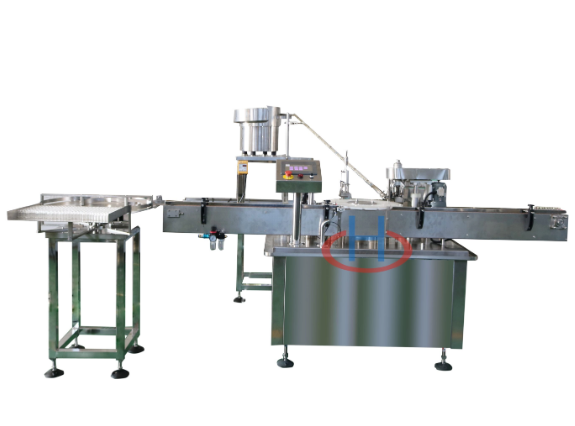
The heart of any filling machine is its dosing system. For 10ml vials containing sensitive and expensive products, the choice between peristaltic and piston pumps is a critical decision driven by the specific application. Each technology offers distinct advantages in accuracy, sterility, and operational speed.
Peristaltic pumps are celebrated for their sterile design. The product only contacts a single-use, pre-sterilized tube, which completely eliminates the risk of cross-contamination between batches. This makes them ideal for clinical trials, cell therapies, and other applications where absolute sterility is paramount. However, the flexible tubing can experience wear over long production runs, potentially causing minor variations in dosing accuracy.
Ceramic piston pumps, on the other hand, offer exceptional durability and repeatable accuracy, often exceeding +/- 0.5%. The non-reactive ceramic material is easy to clean and sterilize, and its hardness resists wear. This makes it a preferred choice for high-speed, large-scale commercial manufacturing where consistency is key. The main consideration is the need for rigorous cleaning and validation procedures between different products.
| Feature | Peristaltic Pump | Ceramic Piston Pump |
|---|---|---|
| Sterility Assurance | Excellent (disposable fluid path) | Very Good (requires validated CIP/SIP) |
| Cross-Contamination Risk | Virtually zero | Low, depends on cleaning protocols |
| Dosing Accuracy | Good to Very Good (+/- 1%) | Excellent (+/- 0.5% or better) |
| Speed & Throughput | Moderate to High | High to Very High |
| Ideal Application | Biologics, clinical trials, multi-product lines | Large-scale commercial production, single-product lines |
Modern equipment integrates PLC-controlled servo motors for dosing. This technology allows for independent and precise adjustment of each filling nozzle. Operators can fine-tune the fill volume, speed, and acceleration profile directly from the HMI (Human-Machine Interface) without mechanical adjustments. For sensitive biologics, this is crucial. Servo control can minimize shear stress by creating a gentle filling profile, protecting the integrity of complex protein structures during the dosing process.
Many modern parenteral drugs, particularly biologics, are not stable in liquid form and require lyophilization (freeze-drying) to ensure a long shelf life. This process demands specialized stoppering capabilities that go beyond simple full insertion. A machine’s ability to handle both half and full stoppering is a testament to its versatility.
A vial half stopper filling machine is indispensable for freeze-drying. After filling, the stopper is partially inserted into the vial, leaving a small gap. This gap allows water vapor to escape from the product during the sublimation phase inside the lyophilizer. Once the cycle is complete, the shelves of the lyophilizer press down, fully seating the stoppers under a sterile vacuum or nitrogen environment. A machine that can perform this precise half-stoppering action is essential for an integrated lyophilization workflow.
Ensuring stoppers are correctly placed at high speeds is a mechanical challenge. Top-tier machines use vacuum-assisted pick-and-place systems. A vacuum chuck securely holds the stopper during transport and placement, preventing it from tilting or falling. This system ensures consistent and accurate positioning for both half and full insertion.
Furthermore, production needs can change. A filling line might need to handle different vial and stopper sizes. Key features to look for include:
Quick-change parts: Tool-less or minimal-tool changeover components that allow operators to switch formats (e.g., from 13mm to 20mm stoppers) with minimal downtime.
Adjustable settings: HMI-based recipes that store parameters for different vial/stopper combinations, reducing setup time and human error.
This flexibility future-proofs the investment, allowing the equipment to adapt to new products or packaging requirements.
For any equipment handling parenteral drugs, compliance with current Good Manufacturing Practices (cGMP) is non-negotiable. The design of 10ml vial filling equipment must prioritize sterility and prevent contamination at every stage. This is achieved through careful material selection, machine geometry, and cleanability features.
The materials used in construction are the first line of defense against contamination. Industry standards dictate:
AISI 316L Stainless Steel: For all parts that come into direct contact with the product, such as pumps, nozzles, and holding tanks. This grade offers superior resistance to corrosion and chemical reactions.
AISI 304 Stainless Steel: For non-contact parts and the machine frame. It provides durability and a smooth, easy-to-clean surface.
The machine's physical design is equally important. It must be compatible with ISO 5 / Class 100 Laminar Air Flow (LAF) hoods or Restricted Access Barrier Systems (RABS). This means the equipment should have minimal flat surfaces where particles could settle and a geometry that promotes unidirectional airflow, whisking away any potential contaminants from the open vials.
Manual cleaning is a major source of potential error and contamination. Modern machines are often designed for automated Clean-in-Place (CIP) and Steam-in-Place (SIP) procedures.
CIP: An automated system that circulates cleaning solutions, rinses, and detergents through the entire fluid path without disassembly.
SIP: Uses high-temperature pressurized steam to sterilize the fluid path after cleaning, providing a high level of sterility assurance.
These features drastically reduce manual intervention, ensure repeatable and validatable cleaning results, and improve operator safety by minimizing exposure to cleaning agents.
In high-value pharmaceutical manufacturing, every lost vial translates to significant financial loss. Intelligent sensors and control logic are no longer optional luxuries; they are essential features for maximizing product yield and ensuring process integrity. These automated checks prevent waste and maintain quality without interrupting the production flow.
A core feature of modern filling lines is a series of presence-detection sensors that operate on simple but effective logic. This logic is crucial for preventing common sources of product loss.
"No Vial, No Fill": A sensor at the filling station checks for the presence of a vial under each nozzle before the dosing cycle begins. If a vial is missing, the corresponding pump is instructed not to dispense, preventing valuable product from being wasted onto the conveyor.
"No Vial, No Stopper": Similarly, a sensor at the stoppering station ensures a vial is present before attempting to place a stopper. This prevents stoppers from being dropped and wasted.
"No Stopper, No Cap": Downstream, a sensor verifies that a stopper has been successfully inserted before an aluminum cap is applied. This prevents vials from reaching the final stage unsealed, which would compromise sterility.
Sensors do more than just prevent actions; they also identify faults for removal. An automatic rejection station, often using a gentle pneumatic arm, removes faulty vials from the line onto a separate tray. This system can be triggered by various inputs, including missing stoppers, out-of-spec fill levels detected by checkweighers, or improperly applied caps. This automated quality control happens without stopping the entire line, maximizing uptime.
For the final sealing step, torque monitoring on the capping head is a critical quality attribute. The system provides real-time feedback on the pressure being applied to crimp the aluminum cap. This ensures a consistent and secure seal, which is vital for maintaining container closure integrity. It also prevents over-torquing, which can cause vial breakage and line stoppages.
A filling machine rarely operates in isolation. It is a central component of a larger packaging line. Its ability to integrate seamlessly with upstream and downstream equipment is crucial for overall efficiency. A well-designed 10ml bottle filling machine should be both scalable and easy to integrate.
Modern equipment is designed with a modular footprint, allowing it to easily connect with other machines like vial washers, depyrogenation tunnels, labelers, and cartoners. Standardized conveyor heights and communication protocols (like PackML) simplify this integration process. The goal is to create a continuous, automated flow from sterile vials entering the line to packaged final products exiting it.
Changeover efficiency is another critical factor, especially for contract manufacturing organizations (CMOs) that handle multiple products. Features that minimize downtime during a format change are highly valuable. Look for tool-less change parts, such as star wheels and guide rails, that can be swapped out by hand in minutes. An operator should be able to switch the line from filling 2ml vials to 10ml vials in under 30 minutes, a significant improvement over older, mechanically complex systems.
The physical layout of the machine—linear or rotary—impacts throughput and facility fit.
Linear Machines: Vials travel in a straight line. These systems are typically simpler, have a smaller footprint, and are ideal for lower to medium-speed applications (e.g., up to 100 vials per minute). They are often well-suited for R&D labs and clinical batch production.
Rotary Machines: Vials are transferred onto a large rotating turret with multiple filling, stoppering, and capping stations. This continuous motion design allows for much higher throughput (e.g., 200-400+ vials per minute) and is the standard for large-scale commercial manufacturing. However, they require a larger initial investment and more floor space.
The choice depends entirely on your batch size, speed requirements, and available facility space.
The initial purchase price of 10ml vial filling equipment is only one part of its total cost. A smarter evaluation focuses on Total Cost of Ownership (TCO), which includes operational efficiency, maintenance costs, and compliance overhead. Features that boost yield and reduce long-term expenses often deliver a much higher return on investment (ROI).
It's tempting to choose the fastest machine available, but this can be a false economy. Consider two machines:
Machine A: Runs at 200 vials per minute with a 2% product loss rate due to slight inaccuracies.
Machine B: Runs at 180 vials per minute but has a product loss rate of only 0.5% due to superior pump accuracy and sensor logic.
For a high-value biologic, the cost of the lost product from Machine A can quickly eclipse the value of its slightly higher output. A slower, more accurate machine often delivers a superior ROI by maximizing the yield of sellable product from each batch.
The underlying mechanical design significantly impacts maintenance costs. Older machines often rely on complex mechanical cams and gears, which are prone to wear and require specialized technicians for adjustments. Modern systems increasingly use electronic servo-driven systems. Servos have fewer moving parts, require less maintenance, and allow for recipe-driven, repeatable changeovers via the HMI, reducing reliance on mechanical expertise.
Finally, compliance with regulations like 21 CFR Part 11 requires extensive documentation. Modern filling equipment provides automated batch reporting and secure audit trails. These digital records log every critical parameter, user action, and alarm during a production run. This feature drastically reduces the manual labor associated with paper-based records, streamlines the batch release process, and makes regulatory audits far more efficient.
Selecting the right 10ml vial filling equipment requires a holistic evaluation that balances mechanical precision with digital intelligence and regulatory compliance. Moving beyond a simple speed and price comparison reveals the features that truly drive value: dosing accuracy that protects yield, integrated stoppering that enables advanced formulations, and cGMP design that ensures patient safety. A successful investment hinges on this deeper understanding.
As you move forward, prioritize equipment that offers modularity and flexibility. The pharmaceutical landscape is constantly evolving, and a machine that can adapt to new vial sizes, stoppers, or drug products will protect your investment for years to come. Finally, insist on a Factory Acceptance Test (FAT) using your specific 10ml vials and product. This is the ultimate proof of a machine's capability and your best guarantee for a smooth and successful integration into your manufacturing facility.
A: The speed, measured in vials per minute (VPM) or bottles per minute (BPM), varies widely. Semi-automatic benchtop models may handle 15-30 VPM. Fully automated intermittent-motion linear machines typically run from 50-120 VPM, while high-speed continuous-motion rotary machines can achieve 200-400 VPM or more. The right speed depends on your production scale and batch size requirements.
A: Yes. Many modern vial filling machines are designed with dual-mode functionality. They can be configured to perform full stopper insertion for standard liquid products or partial insertion (half-stoppering) for products destined for a lyophilizer. This versatility is a key feature for facilities that produce both types of sterile drugs.
A: It uses a simple sensor loop. A photoelectric or fiber-optic sensor is positioned just before the filling nozzles. It emits a beam of light that is broken when a vial passes by. If the machine's PLC (Programmable Logic Controller) does not receive this signal at the moment of filling, it assumes a vial is missing and sends a command to the corresponding pump not to dispense product.
A: Requirements vary by machine size and complexity, but you should plan for standard industrial utilities. This typically includes a three-phase electrical supply (e.g., 208V or 480V in the US; 380V or 415V in Europe/Asia), compressed air for pneumatic components (usually around 6-8 bar or 90-115 PSI), and sometimes a vacuum source for stopper placement.
A: To ensure compliance, the machine's software must have specific features. These include secure, multi-level user access controls (operator, supervisor, administrator), a time-stamped and unalterable audit trail that logs all actions and parameter changes, and the ability to generate secure, electronic batch reports. Always verify these capabilities with the equipment manufacturer.


