
English 
+86-21-57450120
+86-18221926197
+86-18221926197
No.1418 Zhuangliang Road, Zhuanghang Town, Fengxian District, Shanghai 201415, P.R. China

Views: 0 Author: Site Editor Publish Time: 2025-09-29 Origin: Site


The industrial landscape has seen a significant transformation with the advent of automation technologies, and one such innovation is the filling machine. A liquid filling machine is an essential piece of equipment in various industries, primarily used for packaging liquid products such as beverages, oils, and other consumables. These machines enhance production efficiency, ensure precision in filling, and reduce labor costs. In this article, we delve into the intricacies of liquid filling machines, exploring their types, working principles, and applications across different sectors.
Liquid filling machines come in various configurations, each designed to handle specific types of liquids and packaging requirements. The most common types include:
Volumetric filling machines are designed to fill containers with a precise volume of liquid. They are ideal for products where the exact volume is critical, such as pharmaceuticals and chemicals. These machines use pistons or pumps to measure and dispense the liquid accurately.
Gravity filling machines rely on gravity to fill containers. They are best suited for low-viscosity liquids like water and juices. The liquid flows from a reservoir into the container, and the filling process is controlled by valves that open and close at specific intervals.
Piston filling machines are versatile and can handle a wide range of viscosities. They use a piston to draw the liquid into a chamber and then push it into the container. This type of machine is often used for thicker liquids like sauces and creams.
Pump filling machines are equipped with pumps that can handle various liquid viscosities. They are highly adaptable and can be used for a wide range of products, from thin liquids to thick pastes. The pump's speed and volume can be adjusted to meet specific filling requirements.
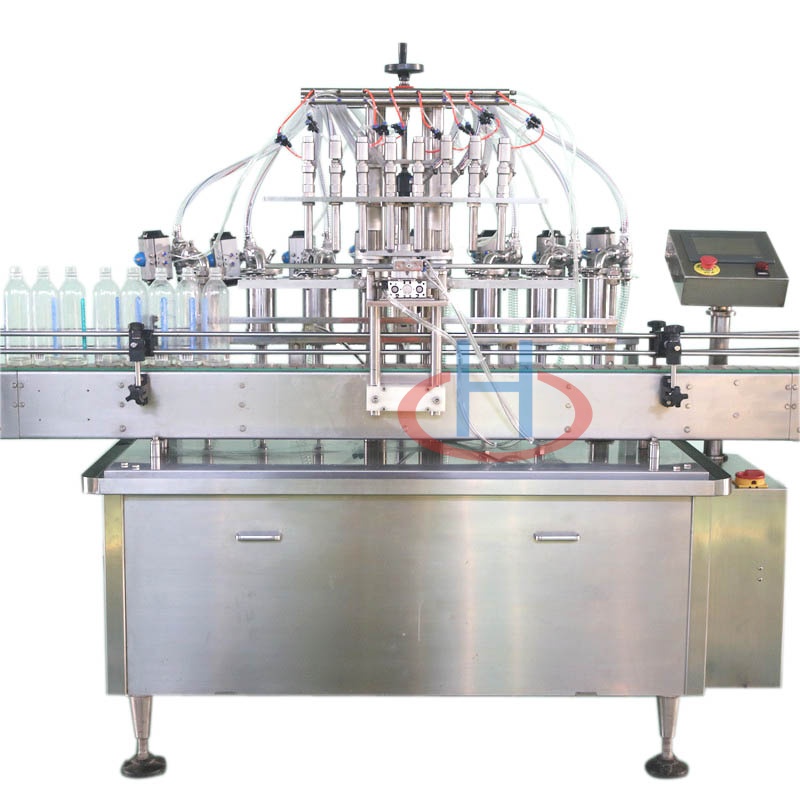

The working principle of a liquid filling machine depends on its type. However, most machines follow a basic process that involves the following steps:
1. Container Positioning: Containers are positioned under the filling nozzles, either manually or automatically, depending on the machine's level of automation.
2. Filling: The machine dispenses the liquid into the containers. The filling process is controlled by a timer, sensor, or mechanical device that ensures the correct volume is dispensed.
3. Sealing: After filling, the containers are sealed with caps or lids to prevent spillage and contamination. This step may be integrated into the filling machine or handled by a separate capping machine.
4. Labeling and Packaging: The filled and sealed containers are labeled and packaged for distribution. This step may also be automated, depending on the production line setup.
Liquid filling machines are used in various industries, each with specific requirements and challenges. Some of the key applications include:
In the food and beverage industry, liquid filling machines are used to package products like juices, sauces, and dairy products. These machines ensure that each container is filled with the exact amount of product, maintaining consistency and quality.
The pharmaceutical industry requires high precision and hygiene standards. Liquid filling machines used in this sector are designed to handle sterile products and prevent contamination. They are used to fill syrups, eye drops, and other liquid medications.
In the cosmetic industry, liquid filling machines are used to package products like lotions, creams, and perfumes. These machines must handle various viscosities and ensure that each container is filled accurately to avoid product wastage.
The chemical industry uses liquid filling machines to package products like cleaning agents, oils, and solvents. These machines must be robust and resistant to corrosion, as they often handle aggressive chemicals.
While liquid filling machines have revolutionized the packaging industry, they also face several challenges. These include handling different liquid viscosities, ensuring precision, and maintaining hygiene standards. Innovations in technology have led to the development of advanced machines that address these challenges.
One such innovation is the integration of sensors and automation technologies that enhance precision and efficiency. For instance, machines equipped with flow meters and sensors can adjust the filling process in real-time, ensuring consistent product quality.
Another advancement is the use of modular designs that allow manufacturers to customize machines according to their specific needs. This flexibility enables businesses to adapt to changing market demands and product variations without significant investments in new equipment.
In conclusion, liquid filling machines are a vital component of modern manufacturing processes. They offer numerous benefits, including increased efficiency, precision, and cost savings. As technology continues to evolve, these machines will become even more sophisticated, offering enhanced capabilities and addressing the challenges faced by various industries. For businesses looking to invest in a filling machine, understanding the different types and their applications is crucial for making informed decisions that align with their production goals.


