
English 
+86-21-57450120
+86-18221926197
+86-18221926197
No.1418 Zhuangliang Road, Zhuanghang Town, Fengxian District, Shanghai 201415, P.R. China

Views: 0 Author: Site Editor Publish Time: 2025-09-18 Origin: Site


In the realm of modern manufacturing and packaging, the filling machine plays a pivotal role. These machines are integral to the efficiency and accuracy of filling operations across various industries, including food and beverage, pharmaceuticals, and cosmetics. The significance of filling machines extends beyond mere automation; they enhance productivity, ensure precision, and reduce waste. This article delves into the importance of filling machines, examining their types, applications, and the technological advancements that continue to shape their evolution.
Filling machines are categorized based on the type of product they handle and the method of filling. The primary types include volumetric, gravimetric, and vacuum filling machines. Volumetric filling machines are known for their speed and are commonly used in the beverage industry. However, their accuracy can be affected by the viscosity of the liquid. Gravimetric filling machines, on the other hand, offer higher accuracy by measuring the weight of the product being filled. These are often used in industries where precision is paramount, such as pharmaceuticals. Vacuum filling machines are typically used for filling glass containers with liquids that are prone to foaming, such as wines and spirits.
Volumetric filling machines operate by measuring a specific volume of liquid to be dispensed into a container. This method is particularly advantageous for high-speed operations, as seen in the beverage industry. However, the accuracy of volumetric filling can be compromised by variations in liquid viscosity. Despite this, advancements in technology have led to the development of more sophisticated volumetric fillers that can adjust to different viscosities, thereby improving accuracy and efficiency.
Gravimetric filling machines measure the weight of the product being filled, ensuring high accuracy and consistency. This type of filling machine is essential in industries where precision is critical, such as pharmaceuticals and chemicals. The gravimetric method minimizes product waste and ensures compliance with stringent industry standards. Recent innovations have further enhanced the precision of gravimetric fillers, making them indispensable in quality-sensitive applications.
Vacuum filling machines are designed for filling glass containers with liquids that are susceptible to foaming, such as wines and spirits. The vacuum process ensures that the liquid is filled without air bubbles, preserving the quality and integrity of the product. This method is particularly favored in the beverage industry, where product appearance and quality are paramount. The use of vacuum filling machines helps maintain the aesthetic appeal and taste of the product, making them a preferred choice for premium beverages.
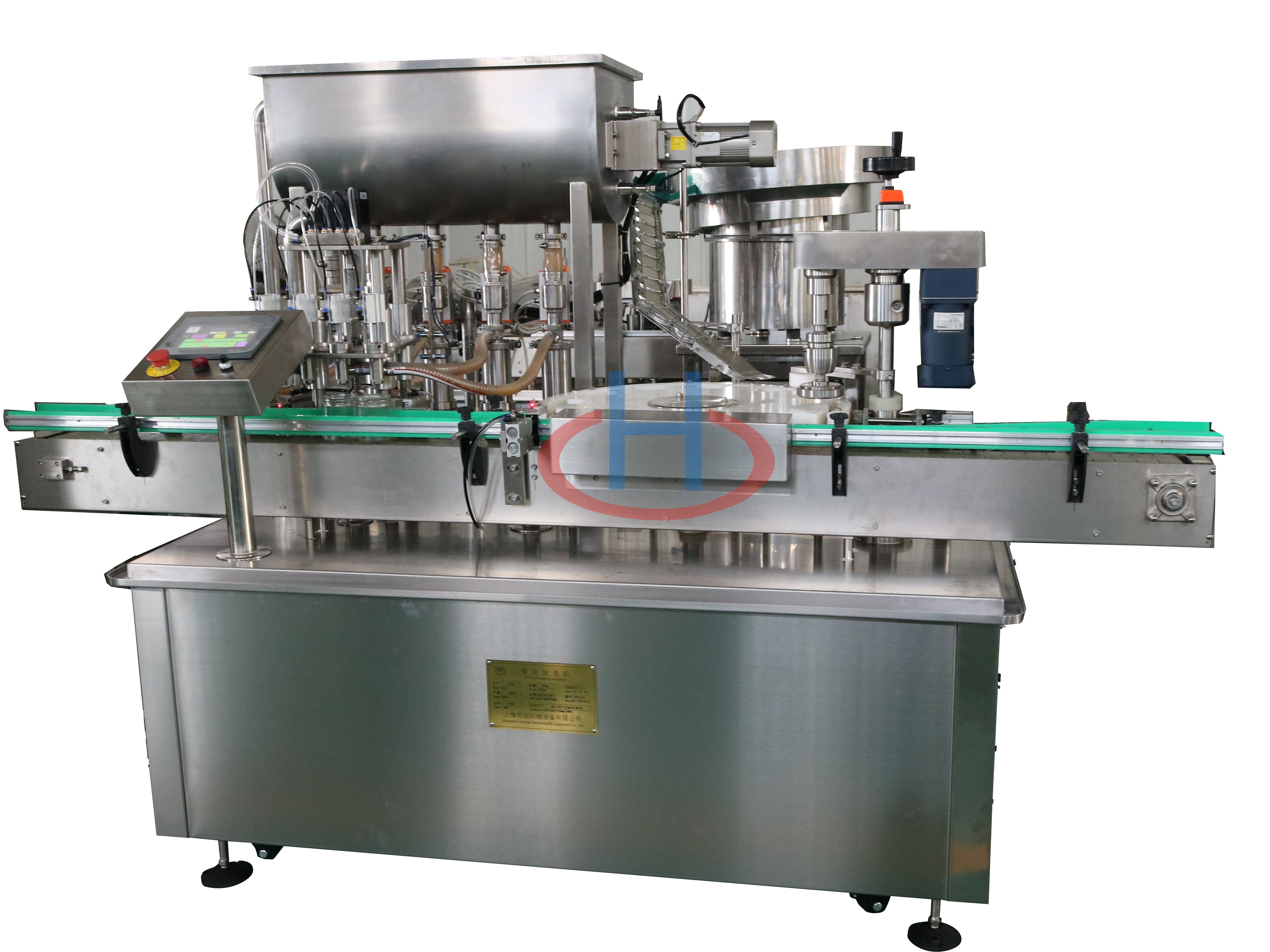
Filling machines are utilized across a wide range of industries, each with its unique requirements and challenges. In the food and beverage industry, filling machines are essential for packaging liquids, semi-liquids, and powders. They ensure that products are filled accurately and efficiently, reducing waste and increasing throughput. In the pharmaceutical industry, filling machines are critical for ensuring the precise dosage of medications, which is vital for patient safety and regulatory compliance. The cosmetics industry also relies heavily on filling machines to package creams, lotions, and other products, where consistency and hygiene are of utmost importance.
The evolution of filling machines has been significantly influenced by technological advancements. Automation and digitalization have transformed filling operations, enhancing speed, accuracy, and flexibility. Modern filling machines are equipped with advanced sensors and control systems that allow for real-time monitoring and adjustments. This ensures optimal performance and minimizes downtime. Additionally, the integration of artificial intelligence and machine learning has paved the way for self-learning filling systems that can adapt to changing conditions and improve over time.
Automation has revolutionized the filling process, enabling machines to operate with minimal human intervention. Advanced control systems allow for precise adjustments to be made on-the-fly, ensuring consistent filling even with varying product characteristics. These systems also facilitate the integration of filling machines into larger production lines, enhancing overall efficiency and productivity. The use of programmable logic controllers (PLCs) and human-machine interfaces (HMIs) further enhances the operability and flexibility of modern filling machines.
The incorporation of artificial intelligence (AI) and machine learning (ML) into filling machines represents a significant leap forward. These technologies enable machines to learn from past operations and optimize their performance over time. AI-driven filling machines can analyze data from previous batches to predict and correct potential issues, reducing errors and improving efficiency. Machine learning algorithms allow for continuous improvement, ensuring that filling machines remain at the forefront of technological innovation.
In conclusion, the filling machine is an indispensable component of modern manufacturing and packaging processes. Its importance is underscored by its ability to enhance efficiency, accuracy, and productivity across various industries. As technology continues to advance, filling machines are poised to become even more sophisticated, offering greater flexibility and precision. The integration of automation, AI, and ML will further drive innovation, ensuring that filling machines remain a critical asset in the ever-evolving landscape of industrial manufacturing.


