
English 
+86-21-57450120
+86-18221926197
+86-18221926197
No.1418 Zhuangliang Road, Zhuanghang Town, Fengxian District, Shanghai 201415, P.R. China

Views: 0 Author: Site Editor Publish Time: 2025-11-04 Origin: Site


A bottle unscrambler turns a chaotic pile of containers into a smoothly oriented and consistently fed stream, ensuring that your filler, capper, and labeler operate without interruptions. For modern beverage, pharmaceutical, and consumer goods production lines, this automated step eliminates the inefficiencies of manual sorting, reduces product handling damage, and maintains a steady flow that keeps your packaging line running at peak performance. At Shanghai Haochao Machinery & Equipment Co., Ltd., our bottle unscramblers are designed to handle a wide variety of container types, providing gentle, precise, and fast bottle orientation for any production environment, helping companies improve productivity and maintain quality standards with minimal downtime.
A bottle unscrambler is an automated machine that sorts, orients, and feeds bulk containers onto a production line in the correct position. These systems are essential for companies that process high volumes of bottles daily, as they eliminate the need for manual handling and ensure that downstream equipment, such as fillers, cappers, and labelers, receive containers in the right orientation. By automating this step, manufacturers can focus more on production efficiency and less on labor-intensive tasks.
Reduces manual sorting labor and associated costs, freeing employees for more skilled tasks.
Prevents downtime caused by jams or misaligned bottles, reducing line stoppages and improving overall productivity.
Improves production throughput by feeding lines continuously at high speed.
Protects product integrity, especially for fragile or high-value containers, by minimizing direct handling.
Ensures consistent quality and presentation of bottles for labeling, capping, and filling processes.
By incorporating a bottle unscrambler into your line, manufacturers achieve more consistent production, reduce errors, and maintain high-quality standards. The investment in this technology often pays off quickly through improved efficiency, lower labor costs, and higher output rates.
Bottle unscramblers are designed with different mechanisms to accommodate various production speeds, bottle shapes, and line layouts. Understanding the main types can help you select the right system for your operations.
Rotary unscramblers typically use a rotating drum or starwheel system that relies on gravity and centrifugal force to orient bottles. Bulk bottles are loaded into the drum, where they fall into pockets or cavities. These pockets rotate, aligning bottles in a consistent orientation before transferring them to a conveyor or chain for downstream processing.
Ideal for rigid bottles such as PET and glass.
Capable of high-speed operation, ranging from 200–800 bottles per minute.
Can handle various bottle diameters with minimal adjustment.
Linear or vibratory unscramblers use inclined trays or vibrating surfaces to guide bottles along specific lanes. Mechanical guides or small pushers help separate bottles one by one and orient them for line feeding.
Suitable for lightweight or delicate containers.
Often paired with adjustable guide rails for quick format changes.
Typical throughput ranges from 100–600 bottles per minute, depending on container size.
Ideal for smaller production lines or when precise bottle spacing is required.
Robotic unscramblers incorporate pick-and-place systems guided by cameras or sensors to orient containers precisely. Vision systems detect bottle shape, cap position, and orientation, allowing robotic arms to place each bottle in the correct position.
Perfect for irregularly shaped, asymmetric, or flexible bottles.
Provide extremely high orientation accuracy.
Adaptable to frequent line changeovers or mixed container types.
Often used in pharmaceutical, cosmetic, and specialty beverage lines where precision is critical.
Each unscrambler type balances throughput, versatility, and handling delicacy, making them adaptable to different industries, from beverages to pharmaceuticals. Selecting the right type ensures the most efficient line performance while protecting product integrity.
The bottle unscrambling process transforms bulk bottles into a ready-to-feed production line through multiple automated steps.
Bottles are initially loaded into a hopper or feed tray. Depending on the production scale, hoppers can hold hundreds of containers. Vibratory feeders or controlled agitation prevent jams and maintain a steady flow, ensuring bottles move smoothly into the singulation section.
Singulation separates bottles from the bulk pile into individual lanes or pockets. Rotary unscramblers use rotating drums with pockets, while linear unscramblers rely on vibratory lanes and mechanical guides. Proper singulation ensures that downstream equipment receives bottles one at a time. Singulation is critical to avoid double-feeding, which can cause line stoppages and reduce throughput.
Orientation is critical for line efficiency. Unscramblers use mechanical guides, sensors, or advanced vision systems to verify bottle position. Bottles that are incorrectly oriented are either mechanically flipped, rotated, or returned to the hopper for reprocessing.
Mechanical guides: rails and pushers position bottles reliably.
Sensor-based detection: photoelectric or proximity sensors detect upright positions and alert operators if issues arise.
Vision systems: cameras verify cap alignment, label positions, or unusual shapes, enabling high-precision operations.
Once correctly oriented, bottles are transferred to the main conveyor or puck/vacuum chain system. Smooth transfer minimizes bottle impact and ensures continuous movement without tipping, crushing, or scratching the containers. Gentle handling is particularly important for glass bottles or soft PET containers.
Finally, bottles are indexed to fillers, cappers, and labelers. Pucks or chains ensure precise spacing between containers, enabling high-speed operations without risking misalignment. Many systems include feedback loops that maintain proper spacing automatically, even if line speed fluctuates.
Jams may occur if bottles are stuck in the hopper or guide rails.
Malformed bottles can interrupt singulation and require guide rail adjustments or hopper modifications.
Flexible or lightweight containers require low-force handling systems to prevent deformation.
Consistent monitoring and preventative maintenance can reduce downtime significantly.
By designing the system for easy adjustments and automated detection, modern unscramblers can handle a wide variety of bottle types without frequent manual intervention.
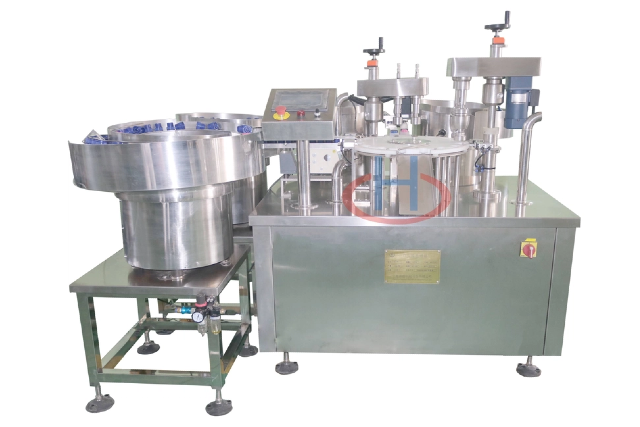
Modern bottle unscramblers incorporate several technologies to maximize efficiency and adaptability.
Photoelectric & Proximity Sensors: Detect the presence and position of bottles.
Vision Systems: Ensure proper orientation and can handle complex or irregular shapes.
Adjustable Guide Rails: Allow quick adaptation to different bottle sizes and shapes.
Pucks or Vacuum Chains: Facilitate gentle and precise handling for fragile containers.
Quick-Change Parts: Enable fast format changes, reducing downtime when switching between bottle types.
Integrated Feedback Systems: Automatically adjust hopper or conveyor speeds to maintain smooth flow.
These technologies are especially important for delicate materials like PET, glass, or uniquely shaped bottles, ensuring minimal damage while maintaining high-speed operation. Machines with modular and easily adjustable parts allow operators to handle multiple formats efficiently, reducing labor costs and increasing production flexibility.
When evaluating a bottle unscrambler, several performance metrics are critical:
Throughput: Bottles per minute that the system can reliably handle.
Changeover Time: How quickly the machine adapts to new bottle sizes or formats.
Bottle Range: Minimum and maximum diameters and heights supported.
Footprint: Space required on the production floor.
Gentle Handling: Low force handling to prevent bottle deformation.
Hygiene & Cleanability: Ease of cleaning for food, beverage, or pharmaceutical applications.
Integration: Compatibility with fillers, cappers, and labeling machines.
Can it handle multiple bottle shapes and sizes?
How fast is the throughput for your line requirements?
Are sensors and guides adjustable for format changes?
Does it offer easy cleaning and maintenance?
Are spare parts readily available?
Can it integrate seamlessly with your existing filling and labeling line?
Is the handling gentle enough for fragile containers?
Does the system include automated error detection and recovery?
Bottle unscramblers address several common challenges on production lines:
Double-Feeds: Smart singulation systems separate bottles accurately.
Tipped Bottles: Mechanical guides and pucks ensure upright orientation.
Fragile Containers: Gentle transfer mechanisms prevent damage to glass or PET bottles.
Inconsistent Bulk Feed: Vibratory hoppers and sensors maintain steady flow.
Line Integration Issues: Advanced indexing and synchronization prevent downstream interruptions.
Advanced systems, including robotic and vision-guided unscramblers, allow manufacturers to handle irregular or challenging container shapes without compromising speed or quality. These features reduce human error, minimize production stoppages, and maintain consistent line efficiency.
Our bottle unscrambler at Shanghai Haochao Machinery & Equipment Co., Ltd. is designed to solve real production pain points:
Gentle handling for glass, PET, and irregular containers.
Adjustable guide rails for fast format changes.
Advanced sensing technology for precise orientation.
Quick-change parts reduce downtime during production transitions.
Handles multiple container shapes with consistent speed and reliability.
Easy integration with existing filler, capper, and labeling lines.
Built with durable materials for long-term, high-volume production reliability.
Contact our packing solutions team for format trials or sample handling to see how our systems can improve your line efficiency and reduce labor dependency.
Adding a bottle unscrambler to your production line can significantly enhance throughput, reduce manual labor, and ensure consistent bottle orientation for downstream equipment. At Shanghai Haochao Machinery & Equipment Co., Ltd., our systems provide gentle handling, versatile format adaptability, and advanced sensing for precision and efficiency. With our automated orientation and feeding solutions, manufacturers can maintain high-speed production without compromising product quality. To experience the difference our bottle sorting and orientation solutions can make for your line, contact our packaging solutions team today and request a sample or trial run to see the benefits firsthand.


