
English 
+86-21-57450120
+86-18221926197
+86-18221926197
No.1418 Zhuangliang Road, Zhuanghang Town, Fengxian District, Shanghai 201415, P.R. China

Views: 0 Author: Site Editor Publish Time: 2025-10-30 Origin: Site


In modern packaging and manufacturing, a labeling machine plays a crucial role in ensuring products are presented professionally and meet regulatory standards. For packaging managers, operations specialists, and procurement teams, understanding labeling machinery is essential for streamlining production, maintaining accuracy, and enhancing brand visibility. By exploring different types, applications, and advantages of labeling machines, this article will guide you through selecting the right system for your operation, highlighting features that improve efficiency and reduce costs. Shanghai Haochao Machinery & Equipment Co., Ltd., a leading supplier of labeling solutions, offers advanced equipment that caters to diverse industries while ensuring consistent, high-quality results. With their expertise, businesses can achieve precise labeling even on complex container shapes, boosting both operational efficiency and brand appeal.
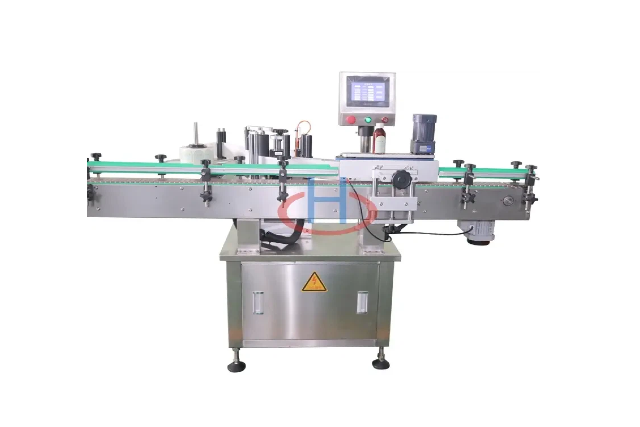
A labeling machine is a specialized device designed to apply labels to containers, bottles, cartons, or other products in a precise and efficient manner. These machines automate the labeling process, significantly reducing manual labor while improving consistency, accuracy, and overall throughput. Labeling machines can apply pre-printed labels, generate variable data, and adapt to different container shapes and sizes. For example, a pharmaceutical company may use a labeling machine to apply precise dosage and batch information, while a beverage manufacturer can ensure wrap-around labels on bottles are perfectly aligned. In industries like food and beverage, pharmaceuticals, cosmetics, and chemicals, labeling machines are essential for ensuring compliance with regulatory standards, accurate product information, and strong brand presentation.
Labeling machines come in various configurations, each suited for specific production needs and container types. Choosing the right type depends on volume, product dimensions, labeling material, and automation level.
Manual and semi-automatic labeling machines are best for small-scale operations, startups, or businesses with variable product lines. These machines allow operators to apply labels with minimal investment while maintaining control over placement. They are simple to operate and ideal for trial batches, limited production runs, or seasonal products. Startups producing specialty beverages, boutique cosmetics, or artisanal foods often choose semi-automatic machines to maintain quality without overspending on automation.
Automatic labeling machines integrate directly into production lines, offering fast and precise application. Industries such as beverage, pharmaceutical, food, and cosmetics often rely on automatic inline labelers to meet high throughput requirements. These systems minimize human intervention, reduce errors, and maintain consistent placement across thousands of units per hour. Inline machines are capable of handling diverse container types, from cylindrical bottles to irregular-shaped jars, ensuring uniformity across large batches.
Pressure-Sensitive Labelers: Attach pre-adhesive labels to a variety of container shapes; common in beverage and cosmetic industries.
Wrap-Around Labelers: Perfect for cylindrical bottles and jars, frequently used in food and beverage packaging.
Top & Bottom Labelers: Apply labels to the top and bottom of containers for promotional or informational purposes.
Multi-Side Labelers: Ideal for boxes, cartons, or rectangular containers, providing 360-degree coverage.
Print-and-Apply Systems: Combine printing and labeling in one step, suitable for variable data, barcodes, and expiration dates.
Tamper-Evident Labelers: Provide security seals for pharmaceutical or cosmetic products, enhancing consumer safety and trust.
Specialty Shape Labelers: Designed for uniquely shaped containers such as oval bottles, tubes, or irregular jars, ensuring accurate label application without wrinkles or misalignment.
Investing in labeling machinery offers multiple advantages that impact operational efficiency, compliance, and branding.
Speed & Throughput: Automation allows rapid labeling of hundreds to thousands of containers per hour, exceeding manual capabilities. Higher throughput supports meeting seasonal demand peaks without compromising quality.
Accuracy & Reduced Rejects: Precise positioning reduces misaligned or wrinkled labels, minimizing waste and product rejections. Fewer errors also mean lower costs for replacements or corrections.
Compliance & Traceability: Labeling machines handle barcodes, batch numbers, and expiration dates, ensuring regulatory compliance. Industries like food, beverage, and pharmaceuticals rely on this feature to avoid recalls and fines.
Reduced Labor Costs: Automation frees staff from repetitive manual tasks, allowing them to focus on higher-value activities such as quality inspection or packaging optimization.
Consistent Branding: Uniform label application enhances brand presentation and consumer trust. Companies can ensure that promotional campaigns, nutritional information, and design elements are applied accurately.
Integration with MES/ERP: Modern machines can integrate with manufacturing execution systems for streamlined operations and data tracking. This enables better inventory control, automated reporting, and improved operational transparency.
Determining when to invest in labeling automation involves evaluating current processes, labor costs, error rates, and production volume. Even without specific monetary figures, businesses can consider the following:
Labor Savings: Fewer operators are required for automated systems, reducing human dependency.
Error Reduction: Lower mislabeling and rework rates improve overall productivity.
Increased Throughput: Higher speed machines meet growing demand without compromising quality.
Downtime Minimization: Robust, high-quality machines reduce the risk of production interruptions.
A typical scenario could involve a beverage line experiencing frequent label misalignments. By introducing an automatic inline labeling machine, the company can reduce errors, accelerate production, and maintain consistent packaging, resulting in faster product turnover and improved customer satisfaction. Similarly, cosmetic brands producing multiple product lines with varying container sizes benefit from quick-adjustment mechanisms and modular systems that reduce changeover time and increase operational flexibility.
Selecting the right labeling machine requires careful consideration of operational needs. Here’s a practical checklist for buyers:
Throughput Requirements: Determine containers per minute and scalability for future growth.
Container Types: Assess shapes, sizes, and stability on the conveyor.
Label Materials: Consider adhesive types, label thickness, and surface compatibility.
Print & Variable Data Needs: Decide if batch numbers, barcodes, or QR codes are required.
Changeover Speed: Evaluate how quickly the machine can switch between different products.
Floor Space Availability: Ensure the system fits within your facility layout.
Integration & Controls: Check compatibility with existing production lines and control systems.
Service & Spare Parts: Availability of maintenance support and replacement parts.
Durability & Build Quality: Look for robust construction to handle continuous operation.
User Interface: Simple, intuitive controls for operator efficiency and training ease.
Not all labeling machines are suitable for every product. Each type is designed for specific container shapes, volumes, and production speeds. Selecting the correct machine ensures accuracy and reliability.
Can a machine handle different bottle sizes? Yes, adjustable settings and quick-change mechanisms allow flexibility for multiple container sizes.
Do I need a printer? Print-and-apply labelers include integrated printers for batch numbers, barcodes, or expiration dates.
Are these machines suitable for fragile containers? Many systems feature gentle handling options to protect delicate products.
Can I integrate with existing production lines? Modern machines are designed for seamless integration with conveyors, sensors, and MES/ERP systems.
Do labeling machines reduce product waste? Absolutely. Precise application reduces mislabeling and eliminates unnecessary discards.
Can they handle high-speed production without errors? Advanced sensors and automation controls maintain accuracy even at high speeds.
Shanghai Haochao Machinery & Equipment Co., Ltd.’s labeling machines are engineered to meet demanding industrial needs. Key features include:
Precise Placement: Advanced positioning controls ensure labels are applied accurately every time.
Multiple Application Options: Supports top, bottom, wrap-around, and multi-side labeling.
Quick-Adjustment Mechanisms: Rapid changeover between different container sizes reduces downtime.
User-Friendly Interface: Operators can easily monitor and control labeling operations.
Automatic Detection: Sensors identify containers and labels, ensuring consistent placement.
Robust Construction: Durable components withstand continuous industrial use, guaranteeing reliability and long service life.
Customizability: Modular design allows adaptation for specific industry requirements, including specialty-shaped bottles, tamper-evident labels, or heavy-duty production lines.
These features directly address operational challenges, from maintaining throughput to reducing rework, helping businesses achieve efficient, high-quality labeling.
To experience the capabilities of Haochao labeling machines, potential buyers can request a live demonstration, send sample containers for test runs, or download detailed specification sheets. These practical steps help ensure the selected machine meets production requirements and quality standards before purchase. Additionally, consulting with the technical team can provide insights into integration with existing production lines, label materials, and container-specific solutions.
In conclusion, a labeling machine is an essential tool for modern manufacturing, ensuring products are consistently and accurately labeled while supporting operational efficiency, regulatory compliance, and brand consistency. Shanghai Haochao Machinery & Equipment Co., Ltd. offers a comprehensive range of labeling solutions designed for diverse industries, combining precision, speed, and reliability. For more information, request a demo, or contact our team to explore how our labeling systems can enhance your packaging line efficiency and product presentation, ensuring high-quality labeling with minimal downtime.


