
English 
+86-21-57450120
+86-18221926197
+86-18221926197
No.1418 Zhuangliang Road, Zhuanghang Town, Fengxian District, Shanghai 201415, P.R. China

Views: 0 Author: Site Editor Publish Time: 2025-10-28 Origin: Site


If your production line needs precise, high-speed packaging, understanding how a labeling machine works is the key to achieving consistent results and reducing waste. Labeling systems are vital in industries from food and beverages to cosmetics, pharmaceuticals, and logistics. They automatically place and secure labels onto bottles, jars, boxes, or pouches with exceptional speed and accuracy. In this article, we will explore the working principles of labeling machines, including their mechanical and electrical components, common applicator types, production workflow, calibration and troubleshooting tips, and how Shanghai Haochao Machinery & Equipment Co., Ltd. designs advanced solutions for reliable labeling performance.
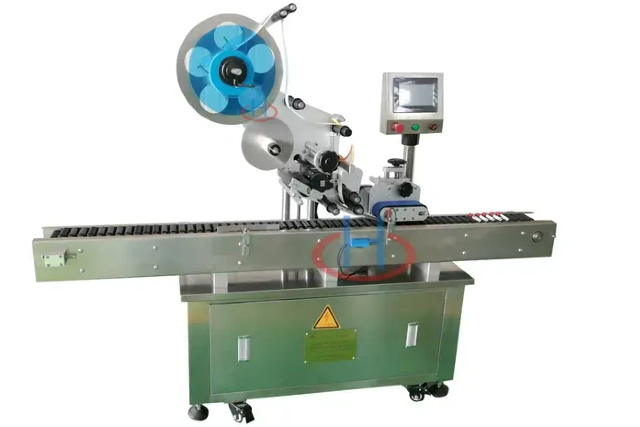
Every labeling machine combines several integrated systems working together to ensure accuracy and efficiency. These include mechanical assemblies, product handling systems, sensors, and intelligent electronic controls. Each subsystem contributes to the precision, stability, and adaptability of the entire unit.
At the heart of the labeling machine lies its mechanical structure — dispensers, rollers, peel plates, and applicator heads. The label roll is mounted on an unwind spool that feeds through tension rollers and a peel plate. When the label passes over the peel edge, the backing material separates, allowing the label to extend forward for application. The applicator head — which could be a tamp pad, blow nozzle, or rolling brush — transfers the label onto the container. Pressure rollers or brushes then secure it in place to eliminate wrinkles or bubbles. Shanghai Haochao’s machines use precision-machined rollers and durable stainless-steel frames to maintain stability under continuous operation. This robust construction ensures consistent performance even in demanding industrial environments.
Conveyors guide the products through the labeling area at a constant speed. Adjustable guides and spacing wheels align each container in the correct orientation before label placement. For cylindrical bottles, wrap belts or rotating rollers are used to apply the label evenly around the surface. In high-speed applications, synchronized feed systems and star wheels separate and position containers to maintain precise spacing between each product. Consistent movement minimizes misalignment, allowing the system to deliver sharp, professional labeling results every time.
Sensors are critical to timing the application process. Photoelectric eyes, encoders, and label gap sensors detect the exact position of both the product and the label’s leading and trailing edges. This information is relayed to the control unit to trigger the applicator at the precise moment the product reaches the labeling zone. Advanced models also feature “no-label, no-apply” functions that automatically pause the process if labels run out, preventing wasted production. Shanghai Haochao’s automatic label detection system provides fast response and stable operation across different materials, from transparent film labels to paper-based options.
Modern labeling machines rely on intelligent electronic control systems to synchronize all motion. A programmable logic controller (PLC) manages signal input and output, while a human–machine interface (HMI) allows operators to adjust label position, speed, and sensor sensitivity through a touchscreen display. Servo motors drive the label feed and applicator heads, providing exceptional repeatability and accuracy. With digital control and automatic synchronization, operators can complete setup or changeovers in minutes. The user-friendly interface on Shanghai Haochao’s machines allows fast parameter adjustment, reducing downtime and training requirements.
Different industries use specific labeling methods depending on container shape, label type, and production speed. Understanding these application techniques helps determine which configuration best suits each product line.
This is the most common method used for bottles, jars, and small containers. The label web passes over a peel plate that separates the label from its liner, presenting it for direct contact with the moving product. The applicator tamp or roller presses the label firmly to ensure adhesion. Pressure-sensitive systems are versatile, easy to operate, and compatible with a wide range of materials. Their main advantage is minimal setup time and the ability to switch label sizes quickly during production runs.
Wrap-around labeling applies a single label around the circumference of cylindrical bottles or cans. As the product rotates against a wrap belt or roller, the label is smoothly wrapped around the surface without wrinkles or overlaps. This method is widely used in beverage, cosmetic, and chemical lines where high throughput and aesthetic uniformity are essential. Shanghai Haochao’s wrap-around systems feature adjustable rollers that maintain tight contact, delivering smooth application even at high conveyor speeds.
In cases where variable data such as barcodes, batch numbers, or expiration dates must be printed on each label, print-and-apply systems are ideal. A thermal transfer or inkjet printer prints the information onto the label immediately before it is applied to the product or carton. This approach ensures real-time traceability and is particularly useful for logistics, pharmaceuticals, and e-commerce packaging. The system can be fully integrated into existing coding and tracking databases to maintain compliance with labeling regulations.
For delicate or irregularly shaped items where direct contact could damage the surface, non-contact methods such as blow-on or tamp-blow labeling are used. In these systems, compressed air gently transfers the label from the pad to the product. The tamp-blow combination gives precise placement even on recessed or uneven surfaces. Such techniques are frequently used for fragile packaging like electronic components, glossy cosmetic boxes, or lightweight containers.
A complete labeling process follows a carefully synchronized sequence:
Label Roll Loading – The roll of pre-printed or blank labels is mounted on the unwind shaft.
Printing (Optional) – Variable information is printed if a print-and-apply unit is used.
Label Feeding – Labels move along the web path through rollers that maintain correct tension.
Product Sensing – Sensors detect the incoming product and trigger label dispensing.
Label Application – The applicator head applies the label at the exact location and pressure.
Verification – Inspection systems or cameras confirm that each label is applied correctly.
Take-Away Conveyor – The labeled product exits the station for packing or further processing.
Each step must be precisely timed. The synchronization between product motion and label feed prevents skewed or misplaced labels. Shanghai Haochao’s systems use advanced servo control and encoder feedback to maintain exact coordination, resulting in higher labeling accuracy and lower rejection rates.
Even well-designed labeling machines require correct calibration and periodic checks to sustain accuracy. Operators should routinely verify label alignment, sensor sensitivity, and tension adjustments.
Label Alignment – Ensure the label web is centered on rollers and not drifting to either side.
Sensor Thresholds – Adjust the photoeye and label sensor sensitivity to detect transparent or reflective labels effectively.
Tension Control – Avoid excessive web tension that causes label stretching or breakage.
Peel Plate Angle – Verify that the peel plate is set correctly to allow smooth label separation.
Speed Matching – Match conveyor and label feed speeds to prevent wrinkles or misplacement.
Adhesive Activation – Check that environmental conditions (temperature, humidity) are suitable for label adhesion.
Air Pressure – For blow-on systems, maintain consistent air pressure to guarantee uniform application.
Cleanliness – Remove adhesive residue from rollers and sensors to avoid buildup that can affect detection.
Regular maintenance extends the lifespan of the machine and ensures consistent labeling quality.
Daily: Clean sensors, remove dust from rollers, check label path, and inspect air filters.
Weekly: Lubricate mechanical parts, inspect drive belts and gears, verify conveyor alignment.
Monthly: Check servo motor connections, examine electrical wiring, and recalibrate sensors.
Spare Parts: Keep backup rollers, sensors, and label webs on hand to minimize downtime.
Shanghai Haochao Machinery & Equipment Co., Ltd. emphasizes maintenance-friendly designs, allowing quick access to critical components for inspection or replacement without interrupting production.
Integrating a labeling system into an existing production line requires balancing speed, accuracy, and compatibility. The machine must match the line’s throughput rate, container geometry, and label material. For example, a high-speed beverage bottling line may require a rotary wrap-around labeler, while a cosmetics producer might prefer a dual-side labeler for square bottles. Consider also whether variable data printing or barcode verification is required.
When evaluating options, buyers should look at control interface compatibility, ease of changeover, and integration with other automation components such as fillers or cappers. Shanghai Haochao’s labeling machines are engineered to connect seamlessly with diverse packaging systems, communicating through PLC and Ethernet protocols for unified control and monitoring. The result is a cohesive packaging operation that maintains consistent performance across every production stage.
Shanghai Haochao Machinery & Equipment Co., Ltd. designs labeling equipment that combines precision, durability, and intelligent automation. Our systems apply labels accurately to bottles, jars, cartons, or irregular shapes without sacrificing speed. Advanced label positioning controls ensure millimeter-level accuracy, while servo-driven applicators maintain consistent tension and feed. The machines support multiple application methods — wrap-around, top, side, or print-and-apply — allowing users to adapt to different packaging formats quickly.
User-friendly HMI panels simplify setup, while automatic label detection eliminates manual calibration steps. These innovations translate into measurable benefits: fewer rejected products, faster changeovers, and reduced downtime. With robust stainless-steel construction and precision components, Shanghai Haochao’s labeling machines maintain high efficiency in continuous production environments, helping manufacturers deliver professional, market-ready packaging every time.
Understanding how a labeling machine works reveals how vital each subsystem is to efficient packaging — from mechanical applicators and sensors to servo-controlled precision. When all these parts operate in harmony, labeling becomes faster, more accurate, and more reliable. Shanghai Haochao Machinery & Equipment Co., Ltd. provides high-performance labeling solutions that meet global standards and adapt to diverse production requirements. To explore our full range of labeling systems, contact us today for a consultation or request a demonstration to see how our technology can upgrade your packaging line.


