
English 
+86-21-57450120
+86-18221926197
+86-18221926197
No.1418 Zhuangliang Road, Zhuanghang Town, Fengxian District, Shanghai 201415, P.R. China

Views: 0 Author: Site Editor Publish Time: 2026-02-23 Origin: Site


Production environments rarely struggle because a filling machine is too slow. Challenges usually appear when multiple machines must work together at higher output levels. Bottlenecks begin to surface in bottle feeding, dosing stability, cap application, labeling alignment, and downstream handling. These issues reveal the difference between operating individual equipment and running a complete Liquid Filling Production Line designed for continuous performance. A high-speed integrated line does not simply increase output; it stabilizes the entire workflow, improves consistency, and supports scalable production planning across beverage, food, pharmaceutical, and chemical industries.
High-speed production is a system concept rather than a single machine specification. When bottle unscrambling, filling, capping, labeling, and coding operate under synchronized control, throughput increases while maintaining stability. The line behaves as one coordinated process instead of separate steps.
Advanced synchronization ensures upstream equipment does not overload downstream stations. Balanced flow prevents bottle congestion before filling and idle time after filling, which protects equipment performance and keeps output predictable.
Speed losses often occur during container transfers, positioning errors, and short interruptions that repeat throughout a shift. Eliminating these micro-stops delivers a larger productivity gain than simply increasing mechanical speed.
Higher throughput amplifies small process differences such as product viscosity variation, air bubbles, or timing shifts. Without integrated monitoring, those small differences lead to visible inconsistency across production batches.
Integrated inspection verifies fill levels continuously and removes out-of-tolerance containers automatically. This protects downstream processes and prevents packaging of non-conforming products.
True accuracy means maintaining the same results across shifts and operators. Stable control systems ensure dosing remains consistent even when production conditions change.
Operators no longer need to manually feed bottles, constantly adjust parameters, or visually inspect each container. Automation removes repetitive tasks that often introduce inconsistency.
Operators shift toward monitoring dashboards, reviewing alerts, and validating production samples. This improves decision-making and supports process optimization.
Recipe-based control allows consistent setup for each product. Training becomes easier and production variability caused by manual adjustments is minimized.
Cleaning procedures directly impact available production time. When cleaning cycles are slow or inconsistent, effective capacity decreases regardless of equipment speed.
Automated cleaning sequences ensure product contact components are cleaned thoroughly while reducing operator workload. Consistency in cleaning supports hygiene compliance.
In pharmaceutical and sensitive food applications, sterilization integration supports higher safety requirements. Automated cleaning and sterilization reduce risk while maintaining uptime.
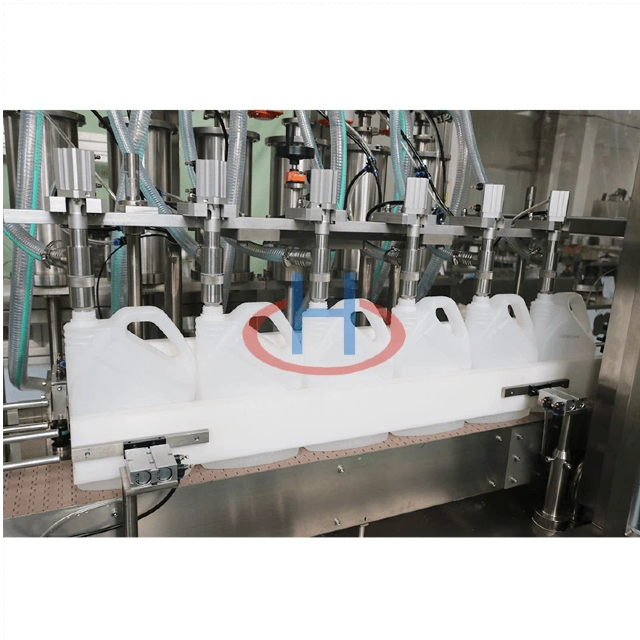
Stored recipes allow rapid switching between bottle formats and products. Mechanical adjustments are minimized, reducing downtime between runs.
Frequent product changes are common in modern manufacturing. Faster changeovers increase usable production time without expanding equipment footprint.
Verification steps ensure correct configuration before restarting production. This prevents early-run defects and stabilizes output after transitions.
Misaligned caps, inconsistent torque, and wear-related variation can result in leaks and product returns. These issues become more significant as output increases.
High-speed lines maintain controlled torque application across large volumes, protecting seal integrity and product safety.
Proper spacing, container stability, and synchronized timing help maintain reliable cap placement even under high throughput conditions.
Accurate labeling ensures consistent branding and regulatory compliance. Misalignment can lead to rework or rejection.
Automated coding ensures batch and date information remains accurate. This strengthens traceability across distribution channels.
Balanced line speed prevents labeling from becoming the slowest station. Integrated rejection logic maintains smooth production flow.
Faster filling can create dripping or foaming if motion control and nozzle timing are not optimized.
Precise motion and filling control reduce product waste and maintain a cleaner production environment.
Automated rejection prevents manual sorting and supports continuous production without interruption.
Guarding, interlocks, and emergency stop systems protect operators and equipment during continuous operation.
Reliable safety design reduces incident-related downtime and supports stable long-term production.
Documented safety mechanisms help manufacturers meet regulatory requirements while improving internal risk management.
As demand grows, additional filling heads, inspection modules, or packaging stations can be integrated without replacing the entire system.
Increasing capacity often requires coordinated upgrades across conveyors, inspection, and data monitoring systems.
Production data helps identify where future investments deliver the highest return.
Benefit | KPI to Monitor | Primary Station |
Throughput increase | Bottles per minute | Filling station |
Fill accuracy | Reject percentage | Filling and QA |
Changeover speed | Minutes per change | Entire line |
Cleaning efficiency | Cleaning cycle time | Filling system |
Seal integrity | Leak rate | Capping station |
Traceability | Coding accuracy | Labeling and QA |
Downtime reduction | Stop frequency | Whole line |
Operator efficiency | Labor per shift | Entire line |
These measurable indicators demonstrate how performance improvements translate into operational value rather than theoretical speed gains.
High-speed lines also influence planning, scheduling, and inventory management. Stable throughput allows more accurate production forecasting. Reduced variation improves packaging consistency, which supports downstream logistics. Faster changeovers enable smaller batch production without sacrificing efficiency, allowing manufacturers to respond to market trends more quickly.
Integrated automation also supports digital manufacturing strategies. Data collection across stations enables real-time monitoring, performance benchmarking, and predictive maintenance planning. This transforms production lines from mechanical assets into data-driven systems that support continuous improvement.
Food producers benefit from improved hygiene and reduced product waste. Beverage manufacturers gain stability when handling foaming liquids or frequent SKU changes. Pharmaceutical companies rely on repeatability and traceability to meet compliance requirements. Chemical packaging operations value sealed handling and safety integration. Across industries, integrated high-speed systems provide a consistent foundation for scaling production while maintaining control.
Although investment decisions often focus on equipment price, long-term value is driven by operational efficiency. Reduced labor requirements, fewer rejected products, shorter cleaning cycles, and improved uptime all contribute to lower total production cost. Predictable output also reduces overtime and inventory buffering.
High-speed integrated lines extend equipment lifespan by minimizing mechanical stress caused by inconsistent flow. Balanced operation reduces wear, supporting maintenance planning and improving reliability over time.
High-speed production success depends on stability, consistency, and adaptability rather than maximum mechanical speed alone. The most meaningful advantages come from fewer interruptions, reliable quality control, faster transitions, and scalable architecture. Haochao designs integrated systems that coordinate bottle handling, filling, capping, labeling, and inspection into one streamlined workflow. Manufacturers seeking sustainable capacity growth can evaluate how a high-speed liquid packaging system supports predictable performance and long-term operational improvement.
Haochao provides integrated filling and packaging solutions designed for real production environments. Our engineering team supports manufacturers in planning capacity upgrades, improving stability, and implementing scalable automation. Contact us to discuss your product characteristics, container formats, and output targets. We can help you develop a production line configuration that supports both current performance goals and future expansion.
What makes a Liquid Filling Production Line high-speed
A high-speed line operates as a synchronized system where bottle handling, filling, capping, labeling, and inspection work continuously without creating bottlenecks.
Does higher speed reduce filling accuracy
No. Integrated monitoring and automated rejection maintain consistent accuracy even when throughput increases.
How does automation reduce production downtime
Automation balances equipment flow, detects issues early, and minimizes manual adjustments, allowing continuous operation with fewer interruptions.
Can one high-speed line handle multiple products
Yes. Recipe-based configuration and quick changeover design allow manufacturers to switch between products and container formats efficiently.


