
English 
+86-21-57450120
+86-18221926197
+86-18221926197
No.1418 Zhuangliang Road, Zhuanghang Town, Fengxian District, Shanghai 201415, P.R. China

Views: 0 Author: Site Editor Publish Time: 2026-03-09 Origin: Site


Manufacturers planning equipment upgrades are increasingly asking what defines a top-rated system rather than simply looking for higher speed or lower cost. A modern Powder Filling Production Line in 2026 is evaluated by how well it reduces risk, maintains accuracy, ensures clean operation, and supports long-term scalability. Investment decisions are shifting toward controllability, repeatability, and integration because these factors determine production stability far more than maximum output specifications.
Consistency across multiple shifts has become a core benchmark. Powder characteristics change over time, and production environments vary. Top-rated lines maintain dosing accuracy through automated feedback, stable feeding design, and consistent calibration routines.
Repeatable performance ensures that quality does not depend on operator experience. Standardized control systems allow manufacturers to achieve uniform results across different teams and production schedules.
Clean operation is no longer viewed as a secondary benefit. Dust containment directly affects product quality, equipment lifespan, and workplace safety. A high-performing powder line integrates sealed transfer points and effective dust extraction to maintain a controlled environment.
Reducing airborne particles also improves sensor performance and minimizes contamination risk, which contributes to stable long-term accuracy.
Traceability has become essential across industries. Automated weight verification, rejection logging, and production data recording provide transparency that supports compliance and continuous improvement. Lines that generate reliable data enable faster troubleshooting and better decision making.
Fine powder accumulation affects mechanical components, influences weighing accuracy, and creates safety risks. Effective dust control protects both production stability and operator health.
Manufacturers increasingly view dust management as a process control requirement rather than a maintenance task.
Top-rated systems incorporate dust containment directly into line architecture. Sealed conveying, controlled drop points, and integrated extraction maintain consistent feeding and reduce cleaning frequency.
This design approach supports continuous production while protecting equipment from premature wear.
Clean operation can be observed through stable airflow, minimal residue around transfer points, and consistent equipment performance. Systems designed for easy cleaning allow operators to maintain hygiene without extended downtime.
Higher production speeds require continuous verification rather than periodic checks. Automated checkweighing ensures each container meets defined specifications without interrupting workflow.
Continuous monitoring improves confidence in production quality and reduces the risk of large defective batches.
Checkweighing identifies underfills, overfills, and dosing variation trends. Early detection allows corrective action before issues affect downstream processes.
Intelligent rejection prevents non-conforming containers from entering packaging stages, preserving overall quality.
Production data now serves as a decision tool rather than a record. Trend analysis reveals material behavior patterns, equipment wear, and process variability. This insight enables predictive maintenance and process optimization.
Stable feeding remains a prerequisite for accurate dosing. Integrated conveying systems ensure the hopper receives consistent material supply, reducing interruptions caused by manual refilling.
Controlled feeding also improves dosing repeatability and reduces variability across batches.
Integrated line architecture synchronizes all stages of packaging. Coordination between dosing, sealing, and labeling prevents bottlenecks and ensures consistent throughput.
This unified approach reduces manual handling and supports continuous production.
Small interruptions accumulate over time and reduce overall efficiency. Integrated control systems detect performance deviations and adjust line behavior automatically, minimizing disruptions.
Changeover complexity depends on container formats, powder properties, closure types, and dosing tooling. As product variety increases, changeover efficiency becomes a key performance indicator.
Top-rated lines reduce mechanical adjustments and rely on stored configuration settings.
Modular auger sets, interchangeable funnels, and standardized sealing components simplify transitions between products. Flexible tooling supports efficient multi-SKU production without sacrificing accuracy.
Digital recipes enable consistent setup across runs. Verification steps confirm correct configuration before production resumes, preventing early-run waste and stabilizing output.
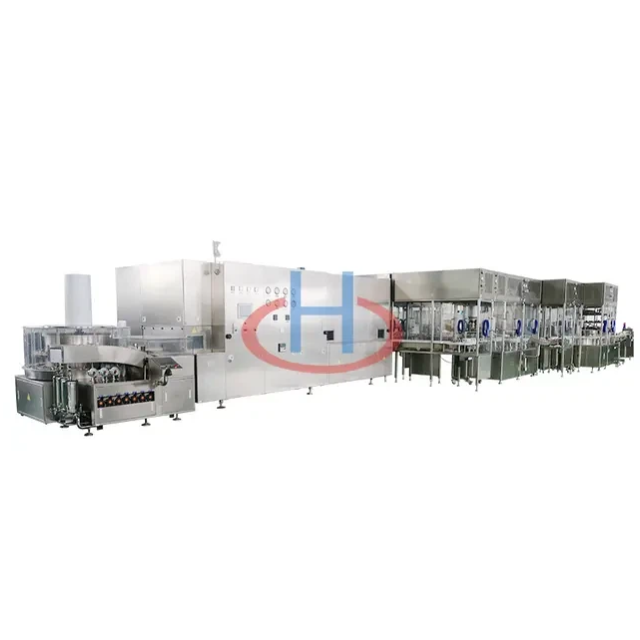
Equipment designed with maintenance access in mind reduces downtime and simplifies routine tasks. Fewer hidden dust traps improve cleaning efficiency and maintain performance stability.
Easy access supports preventive maintenance strategies rather than reactive repairs.
Top-rated lines include clear maintenance intervals for critical components such as augers, seals, and filters. Planned replacement prevents unexpected failures and supports predictable production schedules.
Modern systems provide alerts for deviation trends, sensor inconsistencies, and airflow changes. Early detection allows teams to address issues before they impact production accuracy.
Evaluation item | Why it matters | What good looks like | Your target |
Dust containment | Protect quality and safety | Minimal airborne particles | Yes or No |
Automated weight checking | Maintain accuracy | Continuous verification | Yes or No |
Reject handling | Prevent defective batches | Intelligent rejection | Yes or No |
Quick changeover | Support SKU variety | Recipe-based setup | Yes or No |
Traceability logs | Enable compliance | Recorded production data | Yes or No |
Downstream integration | Maintain throughput | Synchronized workflow | Yes or No |
Maintenance access | Reduce downtime | Easy cleaning and inspection | Yes or No |
This evaluation framework helps decision makers compare production needs with system capabilities.
Automation trends emphasize stability over speed. Manufacturers prioritize predictable performance, reduced material loss, and consistent quality across extended production cycles. Integrated monitoring supports real-time visibility, enabling faster decision making.
Digital connectivity allows teams to analyze performance data across multiple lines. This insight supports capacity planning, maintenance scheduling, and process optimization.
Automation also improves workforce efficiency. Operators transition from manual handling to monitoring and optimization tasks, enhancing productivity and safety.
Food manufacturers benefit from consistent dosing for nutritional blends and specialty ingredients. Pharmaceutical applications rely on traceability and accuracy verification. Chemical producers prioritize dust containment and safe handling. Nutraceutical brands value flexibility to handle frequent product launches.
Across sectors, investment decisions increasingly focus on lifecycle value. Systems that maintain stable performance over time provide stronger return on investment than those optimized only for speed.
Predictable performance reduces operational risk. Stable dosing minimizes material waste, while automated verification protects product quality. Efficient changeovers enable manufacturers to respond to market demand without increasing downtime.
Integrated architecture also simplifies expansion. Additional inspection modules, packaging stages, or data analytics can be added without redesigning the entire workflow.
Maintenance-friendly design extends equipment lifespan and supports continuous improvement strategies.
Real-time dashboards provide insight into throughput, weight deviation, and reject rates. Visibility enables faster troubleshooting and proactive adjustments. Data integration supports collaboration between engineering, quality, and production teams.
Trend monitoring also reveals long-term patterns that inform process optimization. Manufacturers gain a clearer understanding of how material behavior and equipment performance interact.
A top-rated system in 2026 is defined by controllability, repeatability, and integration rather than maximum speed alone. Manufacturers evaluating upgrades benefit from focusing on dust containment, automated verification, flexible changeovers, and maintenance-friendly design. These elements determine long-term production stability and quality consistency. Haochao develops integrated solutions that combine dust collection, automated weight verification, and coordinated workflow architecture, enabling manufacturers to build a smart powder packaging line that supports scalable, reliable production.
Haochao provides advanced powder packaging solutions designed to meet evolving industry requirements for accuracy, cleanliness, and integration. Our engineering team works with manufacturers to develop production lines aligned with material characteristics, capacity goals, and future expansion plans. Contact us to discuss your powder packaging strategy and explore how an integrated system can support your 2026 upgrade roadmap.
What defines a top-rated Powder Filling Production Line in 2026
A top-rated line delivers stable accuracy, effective dust containment, automated verification, flexible changeovers, and integrated workflow control.
Why is dust control considered a core requirement now
Dust affects safety, equipment lifespan, and dosing accuracy, making it a critical factor in production reliability.
How does automated weight checking improve long-term performance
Continuous verification detects deviation trends early, allowing adjustments before defects impact large production batches.
Can a modern automatic powder filling line support future expansion
Yes. Modular design and integrated architecture allow additional inspection, packaging, and data capabilities to be added as production needs grow.


