
English 
+86-21-57450120
+86-18221926197
+86-18221926197
No.1418 Zhuangliang Road, Zhuanghang Town, Fengxian District, Shanghai 201415, P.R. China

Views: 0 Author: Site Editor Publish Time: 2025-11-05 Origin: Site


Choosing the right filling machine can make or break your production line. Have you considered how the wrong choice could impact your product's quality or your operational costs?
In this article, we will explore how to select the best filling machine for your product. We will discuss key factors like product type, production volume, and the unique capabilities of different machines to help you make an informed decision.
This article breaks down everything you need to know about filling machines and offers clear advice on selecting the most suitable one for your product.
Choosing a filling machine requires careful consideration of several factors. The most important include the type of product you are filling, your production speed, and the level of accuracy required.
Different types of products require different types of filling machines. Here's a breakdown:
Liquids: For products like beverages, oils, or detergents, machines that can handle various viscosities are essential. Piston fillers and vacuum fillers are often used for thicker liquids to ensure a smooth, foam-free filling process.
Powders: If you're filling products like flour, sugar, or spices, machines that handle powder consistency, like volumetric fillers, are necessary. These machines are designed to prevent clumping and ensure the right amount is dispensed.
Solids: For products like pills or snack items, weighing filling machines are ideal. These machines fill by weight, offering high precision for solid products.
Always consider the consistency and characteristics of your product before selecting a filling machine. This ensures the machine performs well with your specific product type.
Filling machines come in different configurations depending on the scale of production. Your production volume and speed will dictate which machine is suitable:
Low to Medium Volume: If you are producing smaller batches, semi-automatic filling machines might be the best choice. They offer flexibility and faster setup for smaller runs.
High Volume: For large-scale operations, fully automatic filling machines are ideal. These machines can fill large quantities of products with high efficiency and minimal labor.
For businesses scaling up, investing in an automatic filling machine can significantly improve efficiency and reduce labor costs over time.
Filling machines are crucial for ensuring that each product is filled consistently and accurately. For products that require high precision, such as pharmaceuticals or premium food items, weight fillers or piston fillers provide the most accurate filling. These machines are capable of handling small fluctuations in volume to ensure every product meets the desired specifications.If precision is vital for your product, invest in machines that offer precise control over fill amounts, like piston fillers or multi-head weighers.
Understanding the different types of filling machines will help you match the right technology to your product's needs. Let’s explore some common filling machine types:
Best for: Liquids with consistent viscosity.
How they work: These machines fill by volume. They use a cylinder to measure a specific amount of liquid for each cycle.
Pros: Fast and efficient for liquids with a consistent flow.
Cons: Not ideal for thicker or foamy products, as variations in viscosity can lead to inaccuracies.
Best for: Powders and granular products.
How they work: These machines weigh the product before filling. It ensures that each container is filled with the exact amount of product.
Pros: High precision and ideal for products with varying densities.
Cons: Slower than volumetric machines and require calibration for accuracy.
Best for: Thick, viscous liquids like sauces or gels.
How they work: Piston fillers use a piston to draw in and dispense product. This ensures even filling, especially for high-viscosity liquids.
Pros: Best for products that don't flow easily. They maintain accuracy even with thick liquids.
Cons: Typically slower than volumetric machines.
Best for: Liquids that are prone to foaming, like carbonated beverages.
How they work: These machines use a vacuum to fill the container. This minimizes foaming by preventing air from entering the product.
Pros: Prevents foam and ensures smooth filling of delicate products.
Cons: Can be more expensive than other machines.
Now that we've discussed the different types of filling machines, let's go over how to match them to your specific product. This process involves understanding your product's characteristics and how they align with different filling technologies.
Before choosing a filling machine, assess the physical properties of your product:
Viscosity: Is your product thick or runny? Choose a machine that can handle the flow characteristics of your product.
Granularity: Is your product a powder or solid? A weight filler or volumetric filler might be ideal for products with varying density.
Foaming: If your product is prone to foam, a vacuum filler will minimize air bubbles and maintain the product's integrity.
Your filling machine choice also depends on whether your production is batch-based or continuous:
Batch production: For smaller runs or customized products, consider semi-automatic machines that provide flexibility.
Continuous production: If your operation is large-scale, fully automatic machines that provide continuous filling at high speed are better suited to your needs.
For businesses with frequent changes in product type or packaging, semi-automatic filling machines provide flexibility and adaptability.
Some filling machines, particularly large-scale automatic ones, require significant space and maintenance. Make sure to consider:
Available space in your production area.
Maintenance needs: Machines that are easy to clean and maintain can save both time and money.
Always factor in the space requirements of the machine, especially in a high-volume production environment where every square foot counts.
To help you make the best decision, let's compare manual, semi-automatic, and fully automatic filling machines:
Manual: Best for low-volume or artisanal businesses where custom fills are required. Disadvantages include slower speed and higher labor costs.
Automatic: Ideal for high-volume production with consistent fill requirements. Disadvantages include higher upfront costs but lower per-unit costs over time.
Semi-Automatic: Offers flexibility for medium-volume producers. Requires some manual input but increases speed and consistency compared to manual filling.
Fully Automatic: Best for large-scale producers with high-volume needs. These machines offer the fastest and most efficient filling with minimal manual involvement.
High-Specificity: Machines designed for specific products (e.g., food, pharmaceuticals) offer greater precision but may be more expensive.
General-Purpose: These machines can fill a variety of products, making them versatile for diverse production needs, though they might not offer the same level of precision for specialized products.
For businesses producing multiple types of products, general-purpose filling machines provide greater flexibility.
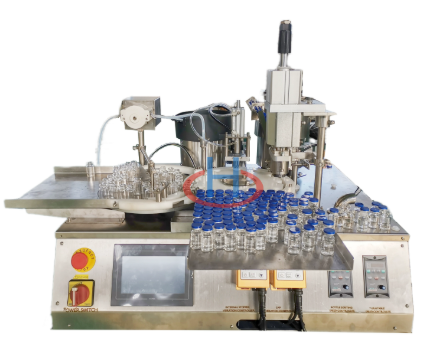
Selecting the right filling machine is essential for ensuring that each container is filled to the exact specifications every time. This consistency in filling minimizes variations that could negatively affect product quality. When the filling process is accurate and uniform, it leads to higher-quality products, which in turn results in fewer customer complaints, returns, or the need for rework. Maintaining this level of precision throughout the production process enhances the brand's reputation for reliability and helps build consumer trust in the product.
By incorporating a filling machine into your production line, you can automate a significant portion of the process, reducing reliance on manual labor. This automation leads to faster filling speeds, higher throughput, and fewer human errors. With less time spent on adjusting or monitoring manual operations, production efficiency increases drastically, allowing you to focus on scaling your business. Moreover, reduced labor costs and minimized product waste lead to lower overall production expenses, improving the profitability of your operations in the long run.
Filling machines designed specifically for industries such as food, pharmaceuticals, and chemicals are crucial in maintaining high safety and compliance standards. These machines are built to meet stringent regulatory requirements, ensuring that your production processes align with safety guidelines and prevent contamination. By adhering to these standards, you minimize the risk of product recalls or health-related incidents, which could severely damage your business's reputation. With the right filling technology, your operation can maintain compliance with industry regulations while safeguarding both consumers and your brand.
Selecting the best filling machine for your product is essential for both product quality and production efficiency. By evaluating factors like product type, volume, accuracy, and machine capabilities, you can make a well-informed choice. Always consult experts and consider your long-term needs to choose a machine that offers both flexibility and efficiency. For businesses looking to enhance their production process, Haochao provides high-quality filling machines that offer precision and value, helping you meet your operational goals.
A: A filling machine is a device used to accurately fill containers with liquids, powders, or pastes. It ensures consistency in quantity and product quality during production.
A: To select the best filling machine for your product, consider factors like product type (liquid, powder, or paste), required accuracy, production speed, and long-term scalability.
A: A filling machine enhances efficiency, reduces human error, ensures consistent product quality, and speeds up production, helping businesses scale operations.


